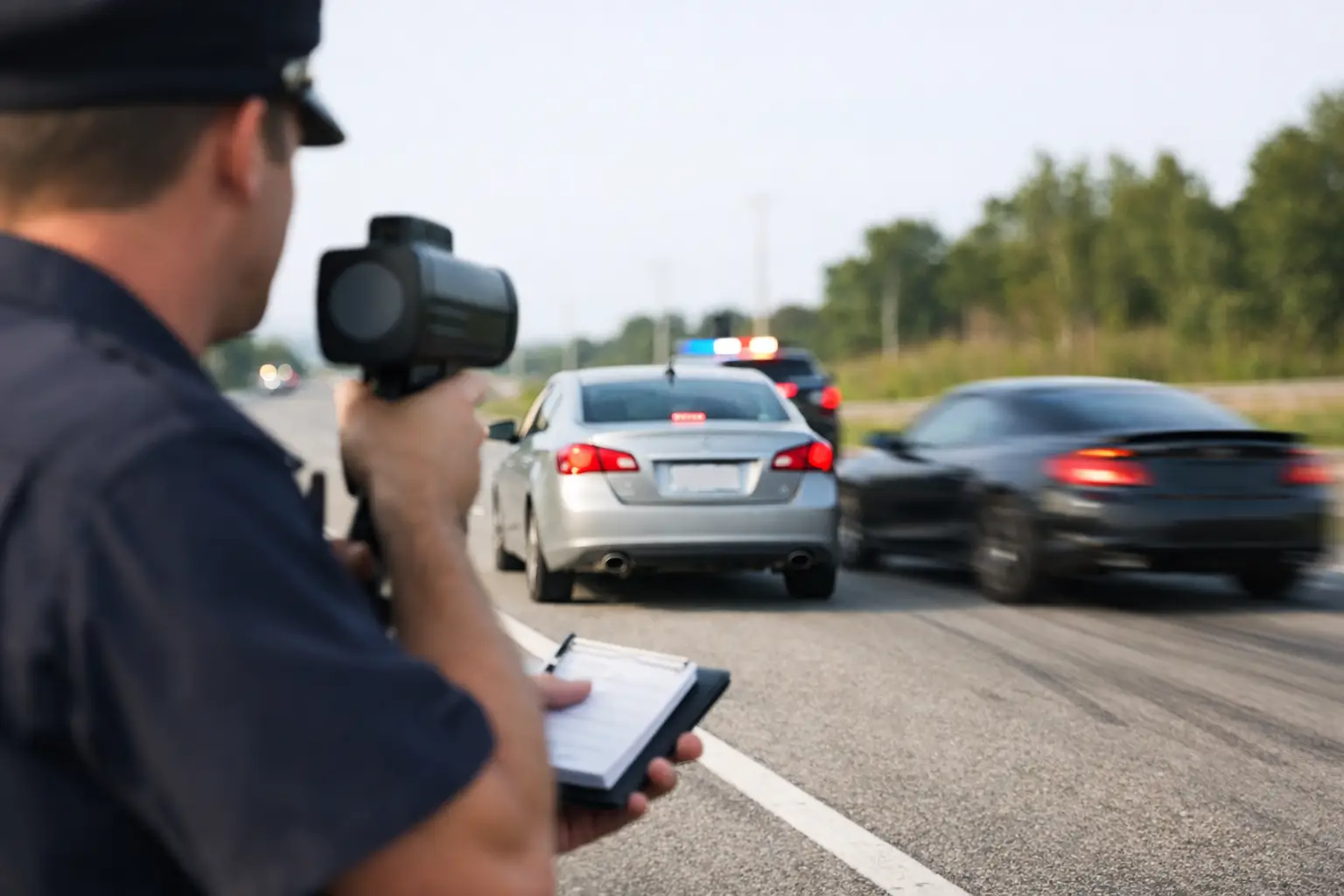
A flashing light in the rearview mirror is stressful enough. But when the officer says reckless driving instead of writing a routine ticket, the situation may be far more serious. The difference between a speeding citation versus reckless driving charge can affect your license, insurance, work, and even your criminal record in Florida.
A standard speeding ticket is usually a civil traffic infraction. Reckless driving is generally a criminal offense. That distinction changes what is at stake and how quickly you should respond.
Speeding Citation Versus Reckless Driving in Florida
A speeding citation alleges that you drove above the posted speed limit or at a speed that was unlawful for the conditions. In most cases, it is handled through the traffic court system. You may have options to pay the citation, elect certain alternatives when available, or challenge it with a traffic attorney.
Reckless driving alleges more than going too fast. Under Florida law, the state must generally claim that you drove with a willful or wanton disregard for the safety of people or property. Put simply, the allegation is that your driving created a known and unjustifiable danger, not merely that your speed exceeded the limit.
That is why an officer may issue a speeding citation after a routine stop but make a reckless driving arrest or require a court appearance when the conduct appears especially dangerous. The label on the paperwork matters. Read it carefully before you decide how to handle the case.
Speed Alone Does Not Automatically Mean Reckless Driving
High speed can give law enforcement a reason to investigate or allege reckless driving, but speed by itself does not automatically establish a reckless driving case. The full situation matters.
An officer may point to factors such as:
- Extremely high speed, particularly in a crowded area
- Weaving through traffic or unsafe lane changes
- Racing, tailgating, or ignoring traffic signals
- Driving behavior that nearly caused a crash or endangered pedestrians
The state still has to support the charge. Road conditions, traffic volume, visibility, your actual driving behavior, video evidence, witness accounts, and the officer’s observations can all matter. There is no benefit to assuming the charge is unbeatable because the officer used the word “reckless.”
Why Reckless Driving Carries Higher Stakes
A civil speeding ticket can bring a fine, court costs, points, and potential insurance consequences. The exact outcome depends on the alleged speed, your record, the county, and how the case is resolved. A conviction for speeding can add points to a Florida license, with more points commonly associated with higher speeds.
Reckless driving can carry criminal penalties. A first reckless driving offense without property damage or injury may be charged as a second-degree misdemeanor, which can expose a driver to fines, probation, and possible jail time. Allegations involving property damage, bodily injury, or repeat conduct can raise the consequences substantially. Serious injury allegations may result in felony exposure.
A criminal record can create problems long after the traffic stop ends. Employers may run background checks. Professional licensing boards may ask about convictions. Rideshare drivers, delivery drivers, and other workers who depend on a clean record may face added scrutiny. For a CDL holder, the concern is even more immediate because a traffic-related conviction can put commercial driving privileges and employment at risk.
Insurance is another concern. A carrier may view a reckless driving conviction much differently than a basic speeding violation. Rate increases, policy changes, or nonrenewal are possibilities depending on the insurer and your history.
How a Speeding Ticket Can Turn Into a Criminal Case
Sometimes the officer writes reckless driving at the roadside. Other times, an event that began as a speed stop develops after the officer observes additional conduct or investigates a crash. In limited situations, prosecutors may also evaluate whether the evidence supports a different or more serious charge.
Do not treat a reckless driving allegation as a ticket you can simply pay online and forget. A criminal charge may involve a notice to appear, a court date, booking, fingerprints, or conditions you must follow while the case is pending. Missing court can create a separate problem, including a warrant or license suspension risk.
The reverse can also be true: an allegation that sounds severe is not necessarily the final outcome. The facts, the quality of the evidence, your driving history, and the legal strategy all matter. A lawyer can evaluate whether the state can prove reckless driving or whether a different resolution may be appropriate.
What to Do After You Receive the Citation or Charge
First, look at every document you received. Identify whether it says speeding, careless driving, reckless driving, a criminal citation, or a notice to appear. Check all deadlines and court dates. Do not rely on memory or assume every traffic matter follows the same process.
Next, preserve what can help explain what happened. Write down the location, traffic conditions, weather, lane configuration, and any statements made during the stop while the details are fresh. Save dashcam footage, phone records that may establish timing, and contact information for witnesses. Do not edit videos, post about the incident, or contact witnesses to influence what they say.
Then get legal advice promptly. For an eligible civil traffic citation, South Florida Ticket Lawyer offers a simple $99 flat-fee process designed to handle the paperwork and court appearance with minimal client involvement. A reckless driving charge requires a more individualized review because criminal allegations, injuries, prior offenses, and county procedures can change the defense approach.
Do Not Make These Costly Assumptions
Many drivers hurt their position by treating the charge as less serious than it is. Paying a civil citation can be treated as a conviction in many circumstances. Ignoring a court notice can cause your case to escalate. Taking traffic school is not a universal answer, and it may not apply to a criminal reckless driving allegation.
It is also risky to assume that a polite conversation with the prosecutor or officer will make the case disappear. Statements made after the stop can be used to support the allegation. Keep communications factual and avoid discussing details of the driving without understanding your options.
Your Record Is Worth Protecting
The practical question is not just whether you were speeding. It is what the government is alleging, what evidence supports it, and what result could follow you after the case closes. A standard citation may be manageable, but it still deserves attention if points, insurance costs, or a clean driving record matter to you.
Reckless driving deserves urgent attention because it can move a traffic stop into criminal court. The faster you identify the charge and address the deadline, the more control you have over the next step. Protect your license, protect your record, and do not let one roadside stop create a bigger problem than it has to be.