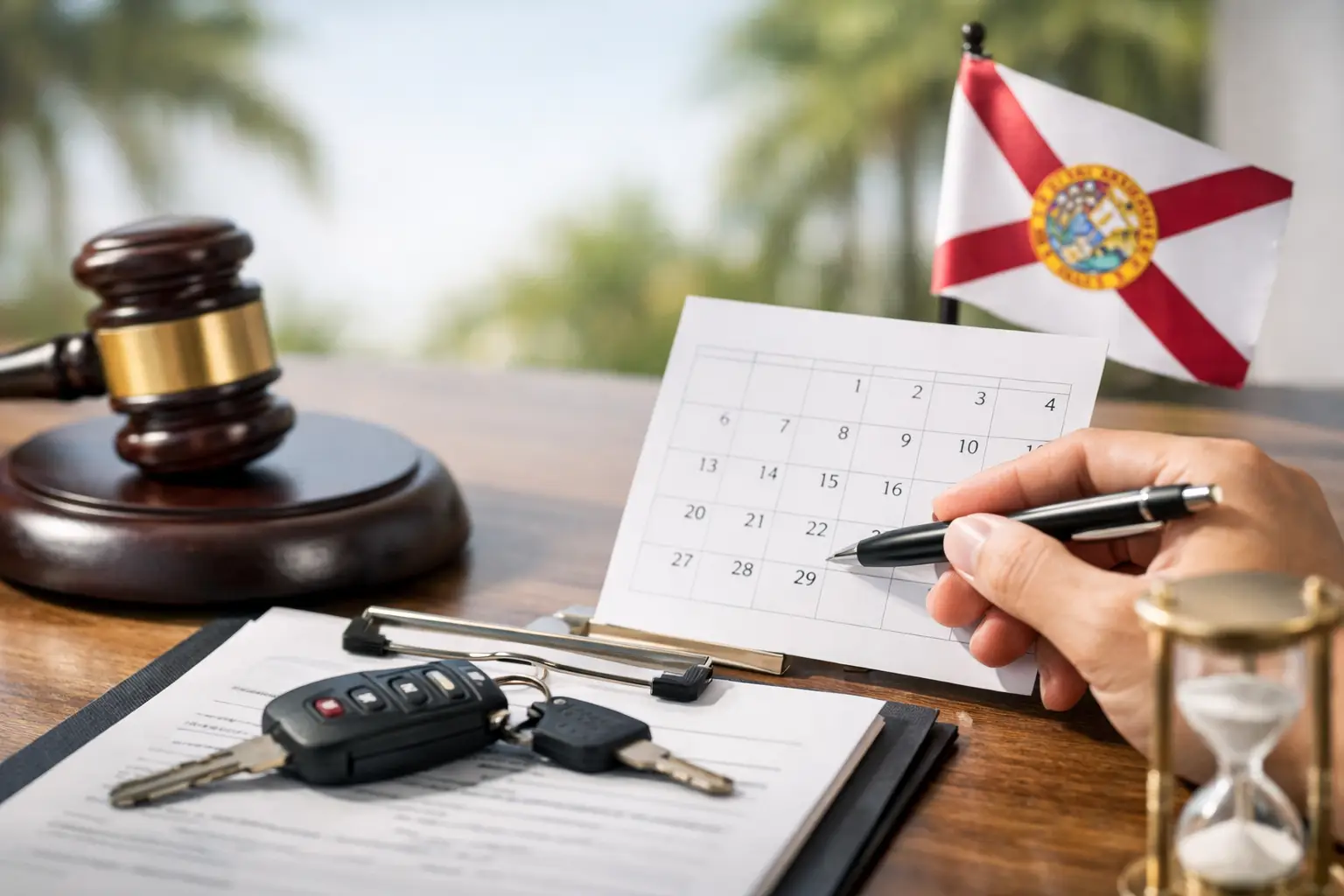
A traffic ticket can sit on the passenger seat for a few days before it starts costing you more. The deadline printed on the citation controls what happens next. If you are wondering how to verify citation deadline information in Florida, do not guess based on when you opened the envelope or when you remember being stopped. Check the ticket, confirm it with the right court or agency, and act before the date passes.
For most South Florida drivers, the goal is simple: protect your license, avoid points, and keep a minor traffic stop from turning into a bigger problem. That starts with knowing exactly what kind of citation you received and when your response is due.
Start With the Date Printed on Your Citation
Your citation is the first place to look. Florida uniform traffic citations usually include an issue date, a county, a citation number, the alleged violation, and instructions for responding. Read the entire front and back, including any box that identifies a court appearance or response date.
Many civil traffic citations in Florida give drivers 30 days to choose an option. That may include paying the fine, electing traffic school when eligible, requesting a hearing, or hiring an attorney to handle the matter. But 30 days is not a safe assumption for every notice. A criminal traffic charge, a citation with a mandatory court appearance, a CDL-related issue, a license suspension matter, or a red light camera notice can follow different rules.
Do not confuse the date you received a mailed notice with the deadline itself. For a ticket issued during a traffic stop, the clock commonly runs from the date the officer issued the citation. For mailed violations, the notice should state the response deadline. If you cannot find a clear date, treat that as a reason to verify immediately, not a reason to wait.
How to Verify a Citation Deadline With the Court
The county listed on the citation generally determines where the case is handled. In South Florida, that often means the clerk of court in Miami-Dade, Broward, or Palm Beach County. Use the citation number, your driver license number, and the date of birth shown on the ticket to confirm the case record.
When you contact the clerk or review the court record, verify more than one item. Confirm the deadline, the violation listed, whether the ticket is marked as civil or criminal, whether a court date has already been set, and whether the case has any hold on your driving privileges. Write down the information, along with the date and time you confirmed it.
Online court records can be useful, but a record may not appear immediately after the stop. That is especially common when a citation was issued recently and has not yet been entered into the court system. If the search shows nothing, do not assume the ticket disappeared. Check again promptly or contact the clerk’s office with the citation in hand.
Check for a Mandatory Court Appearance
Some citations cannot be handled by simply paying a fine. Reckless driving allegations, certain careless driving cases, driving with a suspended license, criminal speeding charges, and other serious violations may require a court appearance. The citation may say “court appearance required,” show a court date, or contain language directing you to appear before a judge.
If a court appearance is required, the hearing date is your deadline. Missing it can lead to additional penalties, a warrant in some criminal matters, or a suspension of your driving privileges. Do not pay a citation just to make it go away if the ticket requires you to appear or if you are unsure what the charge means.
Do Not Rely on a Fine Amount Alone
A listed fine does not tell you the full deadline story. Paying a civil traffic citation can be treated as an admission of guilt, which may result in points on your license. For some drivers, that can affect insurance rates or create problems with an employer. For CDL holders, even a violation in a personal vehicle can have professional consequences.
Traffic school may be available in some cases, but it is not available for every citation or every driver. It also takes time, requires an election before the deadline, and may not be the right choice if protecting your record is the priority. A deadline is not just a date to pay. It is the last day to choose the response that best protects you.
Red light camera cases deserve extra attention. A notice of violation and a uniform traffic citation are not the same document. The first notice may have its own payment or response window. If it advances to a formal citation, a new deadline may apply. Verify which document you have before taking action.
What Happens If You Miss the Deadline?
Waiting past a citation deadline can turn a manageable ticket into a license problem. Depending on the violation, the court or agency may assess late fees, refer the matter for collection, suspend your driver license, or set a court date. Once a suspension is involved, you may face reinstatement requirements and extra costs before you can legally drive again.
A missed deadline does not always mean there is no solution. Courts may allow certain late actions or hearings depending on the circumstances. But you should not count on an extension, especially if your license is already at risk. The longer you wait, the fewer options you may have.
If you discover the deadline has passed, verify your license status right away. Do not drive on an assumed valid license. A new stop while your privileges are suspended can create a much more serious situation than the original citation.
The Fastest Way to Protect Your Options
Take a clear photo of every page of the ticket as soon as you receive it. Make sure the citation number, issue date, county, charge, and handwritten notes are readable. Save the original in a safe place. A blurry photo or missing back page can slow down your response when time matters.
Then decide whether you are handling the ticket yourself or having counsel handle it. If you hire a traffic attorney, submit the ticket early enough for the attorney to review the charge, file the proper paperwork, and confirm representation before the deadline. Do not assume that mentioning you plan to hire a lawyer stops the clock. It does not.
South Florida Ticket Lawyer gives drivers a direct option: send in the ticket, pay a $99 flat fee, and let a Florida traffic attorney handle the paperwork and court appearance when the case allows. That means no running around the courthouse, no guessing about forms, and no traffic school when the matter is handled through the firm’s defense process.
Keep These Details Ready
When verifying a deadline or sending a ticket for review, have the citation number, county, issue date, driver license information, and a complete photo of the ticket ready. If you received a notice in the mail, keep the envelope too. The postmark and mailing dates can matter when there is a question about timing.
Also mention any urgent facts right away. That includes an upcoming court date, a commercial driver license, a current license suspension, a prior missed deadline, or a ticket tied to an accident. These details can affect how quickly the matter needs to be addressed and which options are available.
Verify Early, Then Move With Confidence
The safest answer to how to verify a citation deadline is straightforward: read the ticket, confirm the record with the proper county court or issuing agency, and do it well before the listed date. A traffic citation is easier to defend when you still have every option available.
Do not let a small piece of paper create points, higher insurance costs, missed work, or a suspended license. Check the deadline today, keep proof of what you confirmed, and take action while the clock is still on your side.