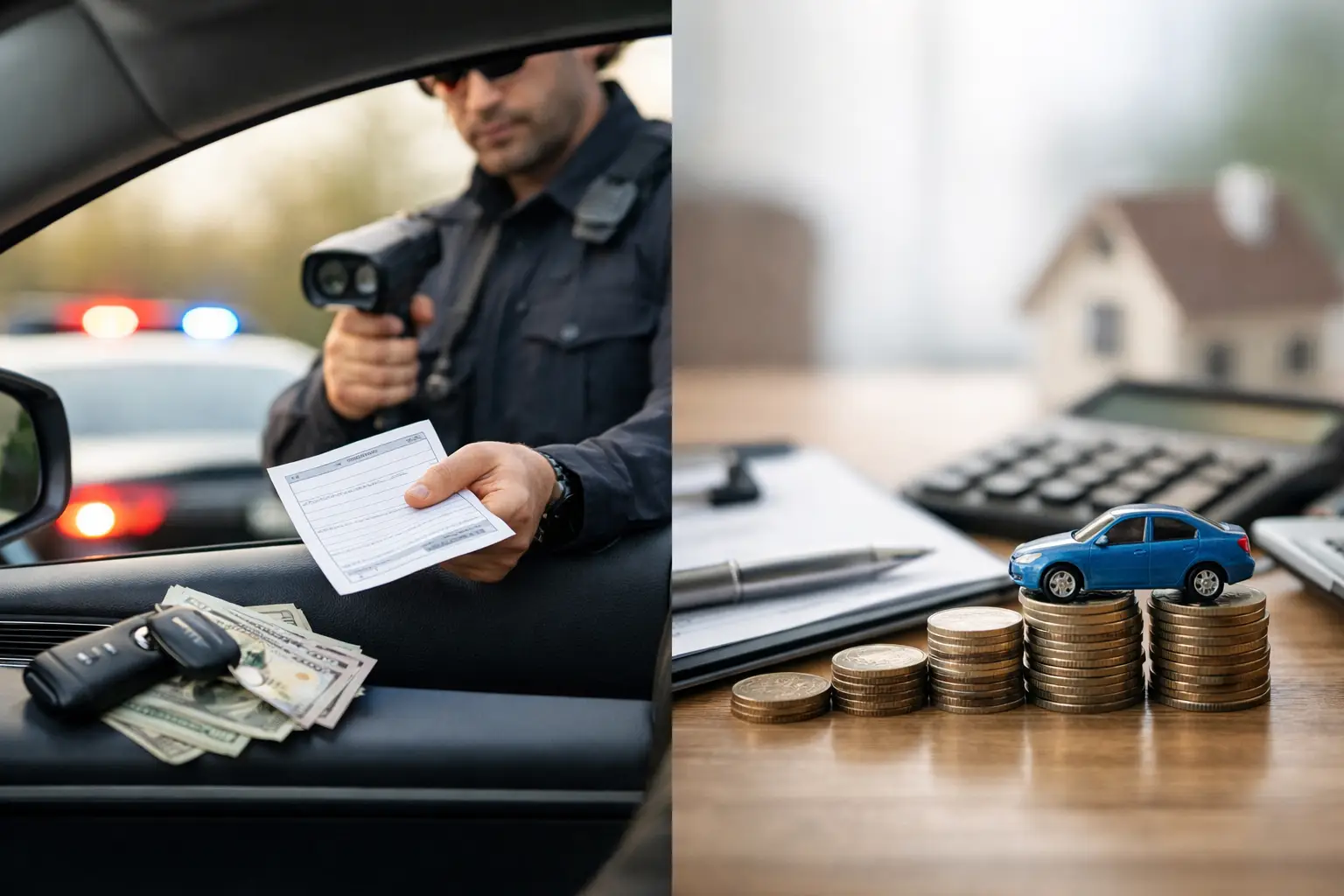
A speeding ticket may look like a one-time expense. The fine is printed on the citation, there is a due date, and paying it seems like the fastest way to move on. But when you compare a speeding fine versus insurance increase, the amount printed on the ticket may be the smaller part of the problem.
For South Florida drivers, the real cost can follow you for months or years if a conviction adds points to your record and your insurer adjusts your rate at renewal. That is why a ticket deserves a response before you simply pay it.
The Fine Is Immediate. Insurance Costs Can Keep Growing.
A speeding fine is the direct cost of the citation. In Florida, the amount can vary based on how far over the limit you were driving, where the violation occurred, court costs, and other facts on the ticket. Speeding in a school zone, construction zone, or another enhanced enforcement area can bring more serious consequences.
That payment hurts once. An insurance increase works differently.
Insurance companies consider many factors when setting rates, including your driving history, prior claims, location, vehicle, coverage limits, age, and available discounts. A moving violation can signal added risk to an insurer. If a speeding conviction appears on your driving record, it may affect your premium when your policy renews.
The exact increase is not guaranteed. Some drivers see little or no change. Others lose a safe-driver discount, become ineligible for a preferred rate, or face a higher premium for multiple policy periods. The difference can be substantial, especially when you already have an accident, prior ticket, young driver, or high-risk rating on your record.
Speeding Fine Versus Insurance Increase: Run the Real Numbers
Do not compare only the fine to the cost of handling the ticket. Compare the fine to the possible total financial impact of a conviction.
Imagine a driver receives a speeding citation with a few hundred dollars in fines and costs. Paying it may feel cheaper than taking action. But if that conviction leads to even a modest monthly insurance increase over several renewals, the added premium can exceed the original ticket amount. If it also causes the loss of a discount, the gap can grow further.
The point is not that every ticket will double your insurance bill. It will not. The point is that paying a speeding ticket can have consequences that are not visible on the citation itself.
For a household with more than one vehicle or driver, the impact can be even more frustrating. A change in policy pricing may affect the family budget long after the ticket has been forgotten.
What Happens When You Pay a Florida Speeding Ticket?
Many drivers treat payment as an admission that ends the matter. In most cases, paying a civil traffic citation means you are choosing the payment option rather than challenging the violation. Depending on the citation and the option selected, that can result in a conviction and points assessed against your Florida driver license.
Points matter because they create a record of the violation. Accumulating too many points within a set period can lead to a license suspension. Even when a single speeding ticket does not put your license at immediate risk, it can still become one more negative mark on the record an insurer reviews.
Florida drivers may have options, including electing traffic school in certain situations. But traffic school takes time, requires eligibility, and does not fit every driver or every violation. Commercial drivers and drivers protecting a professional license or clean record may have additional concerns.
Before paying, look at the ticket closely. Check the alleged speed, the location, the deadline, your license status, and whether prior violations could make this ticket more serious. Missing a deadline can create a separate problem, including possible license suspension.
Why One Ticket Affects Drivers Differently
There is no honest universal answer to the question, “How much will my insurance go up?” Your insurer may not raise your rate at all, and another insurer may increase it significantly. Policies, underwriting rules, driving records, and state regulations all differ.
A first-time ticket for a driver with a long clean history may be handled differently than the same ticket for someone with prior moving violations. The type of speeding allegation also matters. Higher alleged speeds can carry more serious licensing consequences and may be viewed differently by an insurer than a lower-level violation.
Your timing matters, too. If your policy is close to renewal, the financial effect may show up sooner. If you are shopping for new coverage, a recent conviction may affect the quotes you receive. A clean record gives you more choices. A record with points can limit them.
That uncertainty is exactly why the lowest immediate option is not always the least expensive option.
Protecting Your Record Can Protect Your Budget
The strongest reason to address a speeding ticket is not to avoid a single fine. It is to protect what comes after it: your license, your insurance rate, your driving privileges, and your ability to keep moving without disruption.
For drivers who commute through Miami-Dade, Broward, or Palm Beach County, a suspended license or higher insurance bill creates a real burden. It can mean missed work, added transportation costs, and more stress over a ticket that may have seemed minor at first.
A traffic attorney can review the citation, handle the legal process, and work toward an outcome that protects your driving record. You do not need to figure out court procedures, take time off to appear, or assume that paying is your only option.
South Florida Ticket Lawyer keeps the process simple: send the ticket, pay a flat fee, and let a Florida traffic attorney handle the rest. The goal is clear – no points and no traffic school, without making you spend your day in court.
When Paying the Fine May Still Make Sense
There are situations where a driver may decide that paying is the right choice. Perhaps the potential impact has been reviewed, the driver has no concern about points or insurance, and convenience is the only priority. That is a personal decision.
But it should be an informed one. Paying quickly is not the same as resolving the ticket cheaply. If your record, license, job, or insurance rate matters, take a moment to consider the full cost before you admit the violation.
This is especially true for CDL holders. Commercial drivers can face employment consequences beyond a standard insurance increase, and some traffic-school options available to other motorists may not apply in the same way. A citation that looks routine can affect a professional driver’s livelihood.
Take Action Before the Deadline
A speeding ticket has a deadline. Waiting can limit options and may turn a manageable citation into a license problem. Gather a clear photo of the front and back of your ticket, confirm the due date, and get it reviewed promptly.
The fine on the citation is easy to see. The possible cost to your insurance record is not. Protecting your driving history now can be the decision that saves you more later.