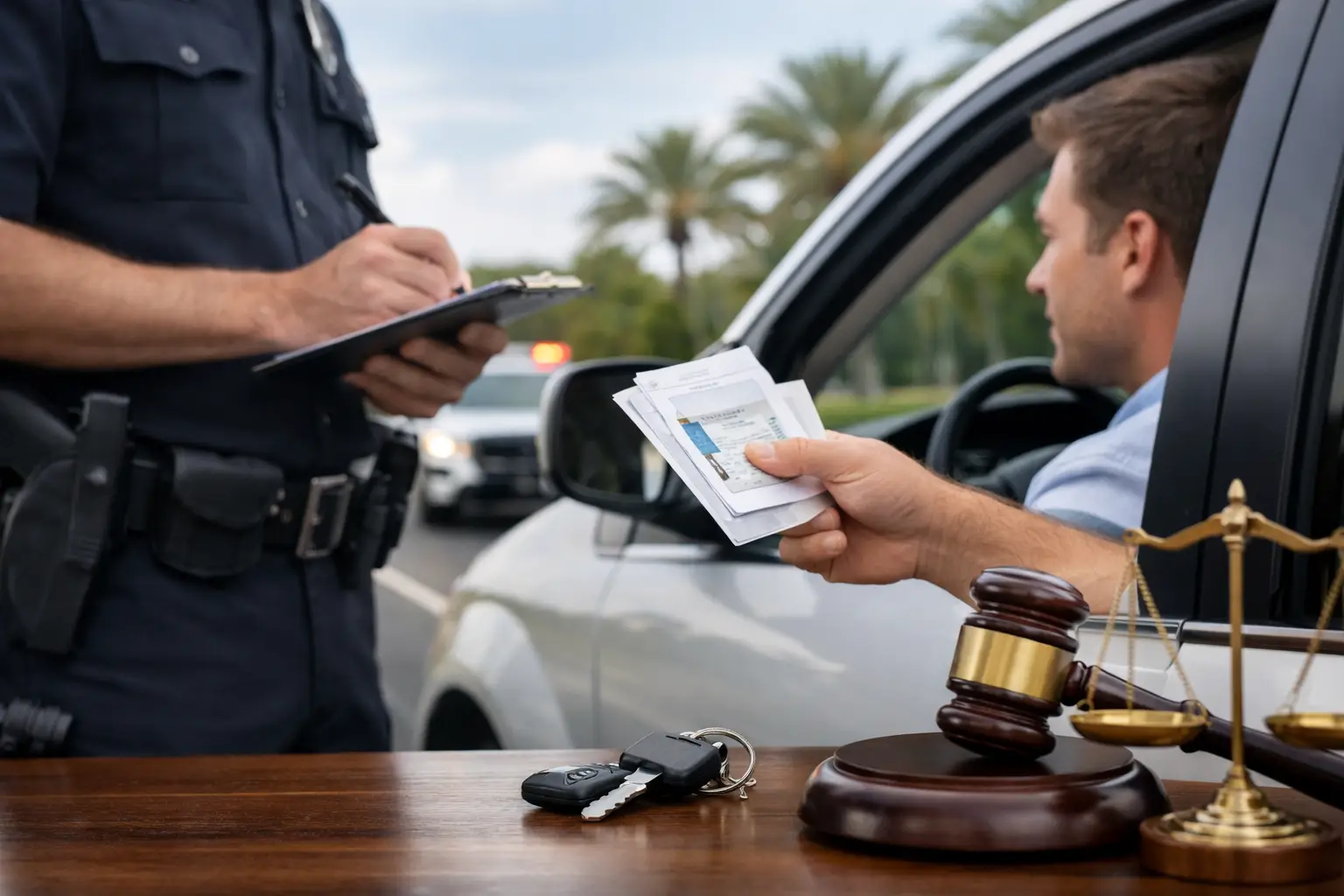
A speeding ticket on I-95, the Turnpike, or your daily route through Miami, Broward, or Palm Beach can feel like a quick fine you should just pay and forget. That is often the expensive choice. Knowing how to fight a speeding ticket in Florida can help you protect your driving record, avoid points, and reduce the risk of higher insurance costs.
The deadline on the citation matters. Florida gives drivers a limited time to respond, and paying the ticket is generally treated as an admission of guilt. Once you pay, the consequences can follow your record long after the fine is gone.
What Happens If You Simply Pay a Florida Speeding Ticket?
Most Florida speeding tickets are civil traffic infractions, but they still carry real consequences. The number of points depends on the speed alleged and the circumstances. A standard speeding violation may result in points on your license, while higher-speed violations can bring more serious penalties.
Points matter because they can affect your insurance premium and put you closer to a license suspension if they add up. Florida can suspend a driver who receives too many points within a set period. For drivers who commute every day, drive for work, or hold a CDL, that is not a risk to take lightly.
Paying may also close off your ability to contest the ticket. If you believe the officer made a mistake, the speed was not properly measured, the sign was unclear, or there is another legal issue, do not pay before you understand your options.
Your Main Options for Fighting a Speeding Ticket in Florida
Florida drivers generally have three ways to respond to a civil traffic citation: pay the fine, elect traffic school if eligible, or contest the ticket. Your citation typically provides the response deadline and instructions. Do not assume you can wait until the last minute or fix a missed deadline later.
Traffic school can prevent points in some situations, but it is not always the best answer. You may need to pay the fine, pay school costs, spend hours completing the course, and use an election that is limited by Florida law. It also does not make the ticket disappear. For a busy professional, parent, or commercial driver, traffic school may be more hassle than it is worth.
Contesting the ticket means challenging it through the court process. You can represent yourself, but that may require filing paperwork, understanding local procedures, and appearing in court. A traffic attorney can handle the case for you and pursue an outcome designed to protect your record.
How to Fight a Speeding Ticket in Florida Without Costly Mistakes
Start by reading every line of the ticket. Confirm the alleged speed, posted speed limit, location, county, date, court information, and response deadline. Keep the ticket, any notes you made after the stop, and any relevant photos or documents together.
Then decide whether there is a reason to challenge the citation. A defense does not always mean proving you were driving at exactly the posted limit. The state still has to support the allegation. Depending on the case, questions may involve the officer’s observations, radar or laser use, pacing methods, identification of the vehicle, signage, road conditions, or the accuracy of information on the citation.
Do not try to build a defense around a story that is not true. The strongest approach is an honest review of the facts and the available legal options. Sometimes the details justify a direct challenge. Other times, the practical goal is resolving the citation without points and without requiring you to appear in court.
Preserve Details While They Are Fresh
Write down what happened as soon as possible. Note where the stop occurred, traffic conditions, weather, lane position, nearby landmarks, and anything the officer said about the alleged speed. If you believe the speed limit sign was blocked, missing, or difficult to see, document the area safely when you can.
This information may not decide every case, but memories fade quickly. A clear timeline gives your attorney more to work with than a vague recollection weeks later.
Do Not Miss the Deadline
A missed response deadline can create problems that are far more serious than the original ticket. Depending on the circumstances, failure to respond can lead to additional fees or a driver’s license suspension. If your license is already suspended, driving can expose you to new charges and further consequences.
Acting early gives you more options. It also prevents the ticket from becoming a last-minute emergency before a work trip, license renewal, or insurance review.
When a Traffic Lawyer Makes Sense
You are allowed to represent yourself, but convenience is a legitimate reason to hire counsel. Court schedules rarely match your work schedule. A hearing can mean missed pay, child-care arrangements, parking, and time spent waiting for a case to be called.
A traffic lawyer is particularly useful when you want to avoid points, cannot attend court, have prior points, drive for a living, or face a higher-speed allegation. CDL holders should be especially careful. Even when an offense occurs in a personal vehicle, a citation can have professional consequences that go beyond the immediate fine.
South Florida Ticket Lawyer is built for drivers who want a straightforward process: send the ticket, pay a flat $99 fee, and let a Florida traffic attorney handle the paperwork and court appearance. The focus is simple – protect your license, avoid traffic school, and keep the process off your calendar whenever possible.
No attorney can ethically promise the same result in every fact pattern, and some tickets involve circumstances that require additional attention. But a routine speeding citation should not automatically cost you a day in court or leave points on your record because paying seemed easier.
What to Expect After You Contest the Ticket
After a timely response is filed, the case moves into the local court process. The exact procedure can vary by county and by the facts of the citation. In many routine civil traffic cases, your attorney can appear on your behalf, so you do not need to stand in a courtroom or argue with the officer yourself.
The attorney reviews the citation, addresses the court requirements, and works toward the best available resolution. That may involve a dismissal, an amended disposition, or another outcome that avoids points. The right result depends on the ticket, your driving history, the county, and the evidence available.
Be skeptical of anyone who tells you every speeding ticket is automatically beatable. It depends. But you should be equally skeptical of the idea that every ticket must be paid immediately. A citation is an allegation, not a command to accept points without asking questions.
Common Mistakes Florida Drivers Should Avoid
The first mistake is treating the ticket like a parking receipt. A speeding citation can affect your license and insurance, so it deserves a response plan.
The second is electing traffic school without considering the trade-off. School may be useful in certain cases, but it costs time and can limit future options. If your goal is no points with no school, speak with a traffic attorney before making that election.
The third is waiting. Drivers often put a ticket in the glove box and remember it when the deadline is close or already passed. Handle it while your options are still open.
Finally, do not assume an out-of-state license makes the ticket irrelevant. Florida citations can still create reporting and licensing issues in your home state. If you were ticketed while visiting South Florida, address it promptly instead of hoping it disappears after you cross the state line.
A speeding ticket does not have to dictate what happens to your driving record. Read the deadline, keep your documents, and get help before a quick payment turns into points, traffic school, or a larger problem.