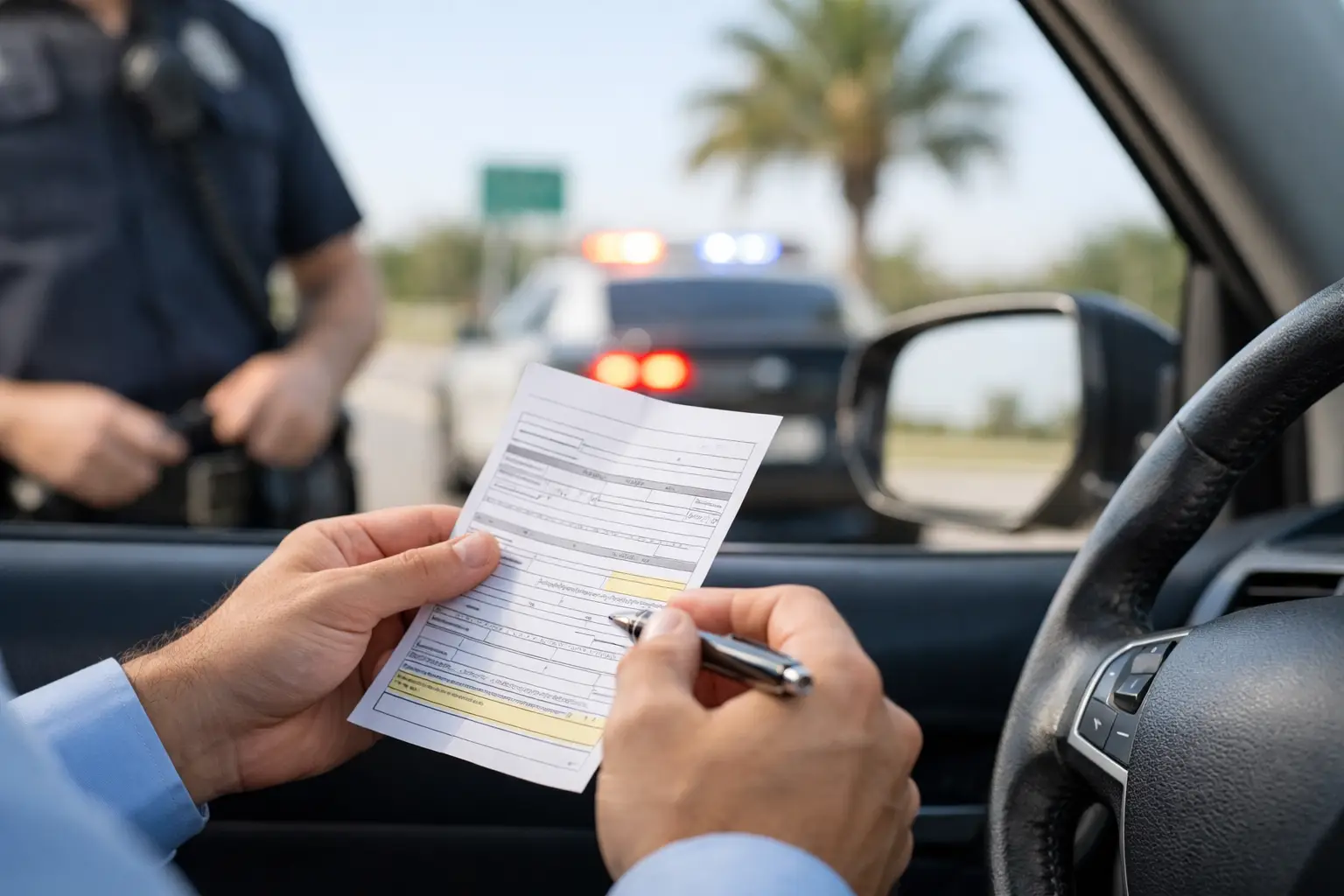
A traffic ticket can take only a few minutes to receive, but the consequences can follow you for years. Points, higher insurance rates, traffic school, missed work, and a damaged driving record are all on the line. Knowing how to fight a traffic citation gives you a better chance to protect your license before a simple mistake becomes an expensive problem.
For most South Florida drivers, the goal is straightforward: resolve the ticket quickly, avoid points, and stay out of court. The right response depends on the type of citation, the deadline printed on it, and whether your job or license depends on a clean record.
Do Not Pay the Ticket Before You Understand the Consequences
Paying a civil traffic citation may feel like the fastest way to make it disappear. In many cases, though, payment is treated as an admission of guilt. That can mean points on your license and a conviction on your driving history.
Those points can affect more than your next insurance bill. If you already have points, a new violation may put you closer to a license suspension. For commercial drivers, even a minor moving violation can create professional consequences. A ticket that seems cheaper to pay today may cost much more over time.
Before choosing any option, read the citation carefully. Look for the violation listed, the county where it was issued, the response deadline, and whether it is a civil infraction or a criminal charge. Florida traffic tickets generally require a response within a limited time, often 30 days. Missing that deadline can lead to extra penalties, a suspended license, or more work to fix the problem later.
How to Fight a Traffic Citation Without Making It Worse
Fighting a citation is not about arguing your case from memory after the deadline has passed. It starts with acting quickly and preserving the facts while they are still available.
Keep the ticket, take clear photos of both sides, and write down what happened. Include the location, time, weather, traffic conditions, road signs, lane markings, and anything the officer said that you remember. If there were passengers, nearby cameras, or witnesses, make a note of that too.
Do not alter the ticket or contact the officer to debate the citation. A roadside argument rarely changes the outcome, and statements you make later can complicate your defense. Focus on the paperwork, the deadline, and the available response options.
For many civil traffic citations in Florida, drivers can choose to pay the fine, elect traffic school if eligible, request a hearing, or retain an attorney to handle the matter. Each choice has trade-offs. Traffic school may avoid points in certain situations, but it takes time and is not the right option for every driver. Requesting a hearing without preparation can mean taking time off work and appearing before a judge on your own.
Hiring a traffic attorney can remove much of that burden. The attorney can file the required paperwork, evaluate the citation, communicate with the court, and appear when permitted. For drivers who cannot afford to miss work or risk a conviction on their record, that convenience matters.
Know What Can Be Challenged
Not every ticket has the same defense, and no honest lawyer should promise that every citation disappears. Still, the facts and legal details matter more than many drivers realize.
A speeding citation may raise questions about the accuracy of the speed measurement, the officer’s observation, traffic conditions, road signage, or whether the alleged speed was properly documented. A careless driving ticket may depend heavily on what actually happened and whether the facts support the charge. Red light camera violations can involve notice requirements, vehicle identification, or the timeline of the alleged violation.
The strongest approach is not always a dramatic courtroom defense. Sometimes the practical objective is a reduction, a withheld adjudication, or another outcome that protects your driving record. The best path depends on the charge, your prior history, the evidence, and the court handling the case.
This is especially true with serious allegations. Reckless driving can be a criminal matter, not just a routine civil ticket. Driving with a suspended license, leaving the scene, certain CDL violations, and some accident-related charges can also carry consequences beyond points. These cases deserve immediate legal attention because the wrong response can affect your license, job, or criminal record.
Protect Your Record if You Drive for Work
South Florida drivers spend enough time in traffic already. If your vehicle is part of your livelihood, a citation has a different level of urgency.
CDL holders, rideshare drivers, delivery drivers, sales professionals, and commuters who depend on their car should not treat a moving violation as a minor inconvenience. Insurance costs, employer policies, license classifications, and driving-history requirements can all come into play. Even when a violation occurred in a personal vehicle, a commercial driver may still have reporting obligations or employment concerns.
Do not assume traffic school is the easiest answer. CDL drivers often face different rules, and an option that works for a noncommercial driver may not protect a commercial driving record. Get advice tailored to the citation and the type of license you hold.
A Simple Way to Handle a South Florida Ticket
You do not need to become an expert in traffic court to respond correctly. You need to move before the deadline and choose a strategy that protects what matters most: your license, your record, and your time.
South Florida Ticket Lawyer is built for drivers who want a low-effort solution. Send in your ticket, pay a $99 flat fee, and a Florida traffic attorney handles the paperwork and court process on your behalf. The firm focuses on resolving eligible traffic citations with no points and no traffic school, so you can avoid the usual court stress and get back to your routine.
That approach can be particularly useful when the ticket was issued in Miami-Dade, Broward, or Palm Beach County and you do not have time to figure out local court procedures. Instead of guessing which box to check, missing a deadline, or taking a chance by paying first, have the citation reviewed promptly.
What to Have Ready Before You Get Help
The process moves faster when you have the basic details available. Have a clear copy of the citation, your driver license information, and any facts that may be relevant to the stop or incident. If the ticket involves an accident, bring any photos, crash report information, or insurance details you received.
Be direct about prior tickets, current license issues, and whether you hold a CDL. These details do not automatically mean you have a bad case. They help determine the right strategy and prevent surprises later.
Also, check the ticket date immediately. A strong defense is far more useful when there is still time to file the proper response. Waiting until the final day creates unnecessary pressure and limits your options.
Do Not Let One Citation Set the Terms
A traffic citation does not have to mean points, traffic school, court appearances, and higher insurance. The key is to respond before the deadline, avoid treating payment as the only option, and get the facts reviewed by someone who handles Florida traffic cases every day.
Your ticket is already in your hand. Take a clear photo of it, keep your deadline in view, and deal with it now while protecting your record is still the priority.