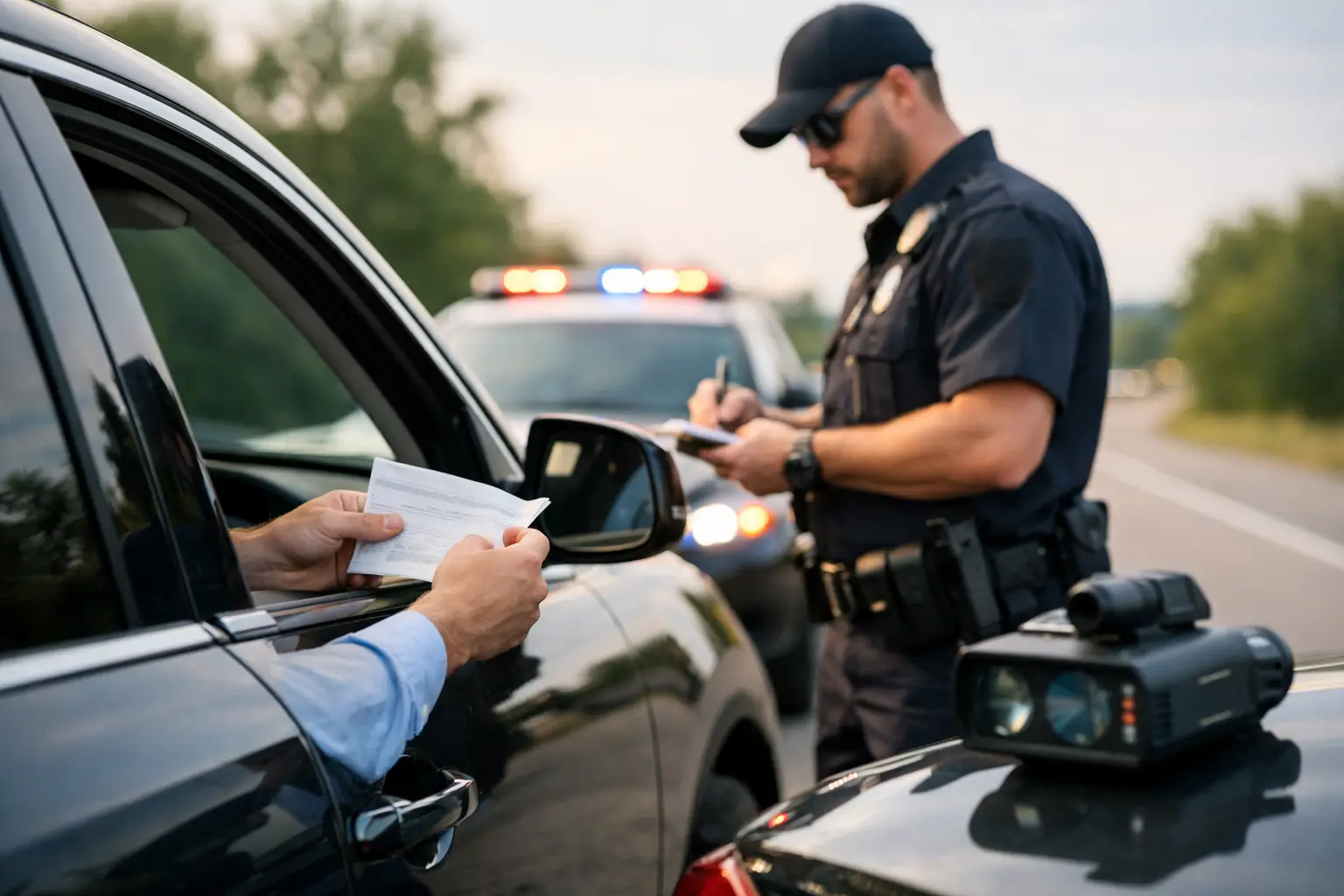
That flash of blue lights in your mirror changes the whole day. Once the ticket is in your hand, the question most drivers ask is simple: what is a good defense for a speeding ticket? The honest answer is that a good defense depends on the facts, the officer’s observations, how speed was measured, and what mistakes appear on the citation. Some defenses are strong. Some are weak. And some sound reasonable but almost never work.
If your goal is to protect your license, avoid points, and keep insurance costs from climbing, the best move is not guessing. It is identifying whether the State can actually prove the violation and whether there is a practical path to resolve it without you spending time in court.
What is a good defense for a speeding ticket in Florida?
A good defense is one that attacks proof, procedure, or identification. In plain English, that means showing the officer may not have measured speed reliably, may not be able to identify the right vehicle with certainty, or may have issued a ticket that contains legal or factual problems.
That does not mean every ticket has a dramatic flaw. Many do not. But even when the facts are not perfect for the driver, there may still be room to challenge the case or negotiate a result that avoids points. That is where strategy matters more than emotion.
In Florida, speeding tickets are usually proven through the officer’s visual estimate, radar, lidar, pacing, or a combination of methods. Each one creates possible issues. The defense is not about telling the judge you are a safe driver or that traffic was moving fast around you. It is about whether the evidence holds up.
The defenses that can actually help
The speed measurement may be unreliable
Radar and lidar are common, but they are not automatic wins for the State. The device must be functioning properly, used correctly, and tied to the right vehicle. If traffic was heavy, multiple cars were close together, or the officer had a limited line of sight, that can matter.
Calibration and maintenance can also become issues. A reading is only as good as the equipment and the way it was used. If records are incomplete or the officer cannot clearly explain the process, that can weaken the case.
This does not mean every radar ticket gets dismissed. It means that equipment-based evidence should be tested, not assumed.
The officer may have identified the wrong vehicle
This comes up more often than drivers think, especially on multi-lane roads in South Florida where traffic moves in clusters. If several vehicles were traveling near each other, the officer must connect the alleged speed to your specific car.
A strong defense may focus on distance, traffic density, lane position, lighting, weather, and how long the officer actually observed the vehicle. If identification is shaky, the ticket becomes harder to prove.
Pacing cases can be challenged
When an officer says they paced your vehicle, they are claiming they matched your speed with their own patrol car over a sufficient distance. That sounds straightforward, but pacing can be questioned if traffic conditions were changing, the patrol car was not maintaining a consistent distance, or the observation period was too short.
Road grade, lane changes, braking, and surrounding vehicles can all affect how reliable a pacing claim really is.
The citation or court process may contain defects
Clerical errors alone do not always get a ticket thrown out. A wrong color car or a typo in the address is usually not enough by itself. But some errors matter more than others, especially if they affect notice, identification, or the officer’s ability to prove the case.
There can also be procedural issues involving filing, appearance, or required documentation. These are case-specific. They are not flashy defenses, but sometimes they create leverage or a path to a better outcome.
The facts may support a reduced charge or non-point resolution
Not every good defense ends with a dismissal. Sometimes the smart defense is practical. If the driver has a clean record, the speed was not extreme, and the circumstances are manageable, the focus may shift to preventing points and avoiding traffic school rather than fighting every inch of the case.
For many drivers, that is the result that matters most. Missing work, going to court, and risking insurance increases over one citation is rarely worth it.
Defenses that usually do not work
A lot of drivers walk into traffic court with arguments that feel fair but do not help much legally.
Saying you were keeping up with traffic is usually not a defense. If everyone around you was speeding, that may explain your decision, but it does not usually excuse the violation.
Saying you did not realize the speed limit changed is also weak unless the signage issue is unusually serious. Most judges hear that often.
Claiming you were late to work, on the way to pick up your child, or in a hurry for an appointment may earn sympathy, but sympathy is not the same as a defense.
Even the classic line that you were going downhill or accidentally speeding for a moment is rarely enough on its own. Without a real issue in the proof, those arguments usually go nowhere.
When necessity might matter
Drivers sometimes ask whether an emergency is a good defense for a speeding ticket. Sometimes, but only in narrow situations.
If there was a genuine emergency involving immediate safety or medical necessity, that can be relevant. But the standard is high. The court will usually want more than a personal explanation. It may require evidence showing there was no reasonable alternative and that the response was truly necessary.
This is one of those areas where details make or break the argument. A real emergency may help. A stressful situation usually will not.
Why the best defense often depends on what the officer can prove
Traffic cases are evidence cases. That is the core point many drivers miss. You do not need a dramatic story to defend a speeding ticket. You need a reason the evidence may be insufficient, unclear, or vulnerable.
Sometimes that reason is technical. Sometimes it is factual. Sometimes it is procedural. And sometimes the best result comes from pushing the case toward a resolution that protects your record instead of gambling on a full trial.
That is why two drivers with similar tickets can have very different outcomes. The road, the officer, the device, the county, the driving history, and the exact speed all matter.
What drivers in South Florida should think about first
In Miami-Dade, Broward, and Palm Beach, drivers usually care about three things: no points, no traffic school, and no wasted time. That is the real-world side of this issue.
If you contest the ticket alone, you may spend hours figuring out deadlines, court procedures, and defenses that may not fit your case. If you just pay it, you may be accepting points and possible insurance consequences without putting up any defense at all.
That is why the strongest move is often to have a traffic attorney review the citation quickly and decide what kind of defense makes sense. A weak argument can waste time. A focused one can protect your record.
So, what is a good defense for a speeding ticket?
A good defense for a speeding ticket is one based on proof, not hope. It might be faulty radar use, weak vehicle identification, an unreliable pacing method, a procedural problem, or a case strategy aimed at avoiding points instead of forcing a bad trial position.
The right defense is not always the most dramatic one. It is the one that fits the facts and improves the outcome.
For most people, the smartest approach is simple: do not admit the violation by paying it before you know your options, and do not assume the only choices are traffic school or court on your own. Firms like South Florida Ticket Lawyer build their entire process around taking that burden off the driver – fast, flat-fee, and focused on protecting the license.
One ticket can cost more than the fine printed on the citation. The right defense can keep it from costing more than it should.